The Greatest Development of My Lifetime—and Why I'm Not Afraid of AI

Updated: Sep 22
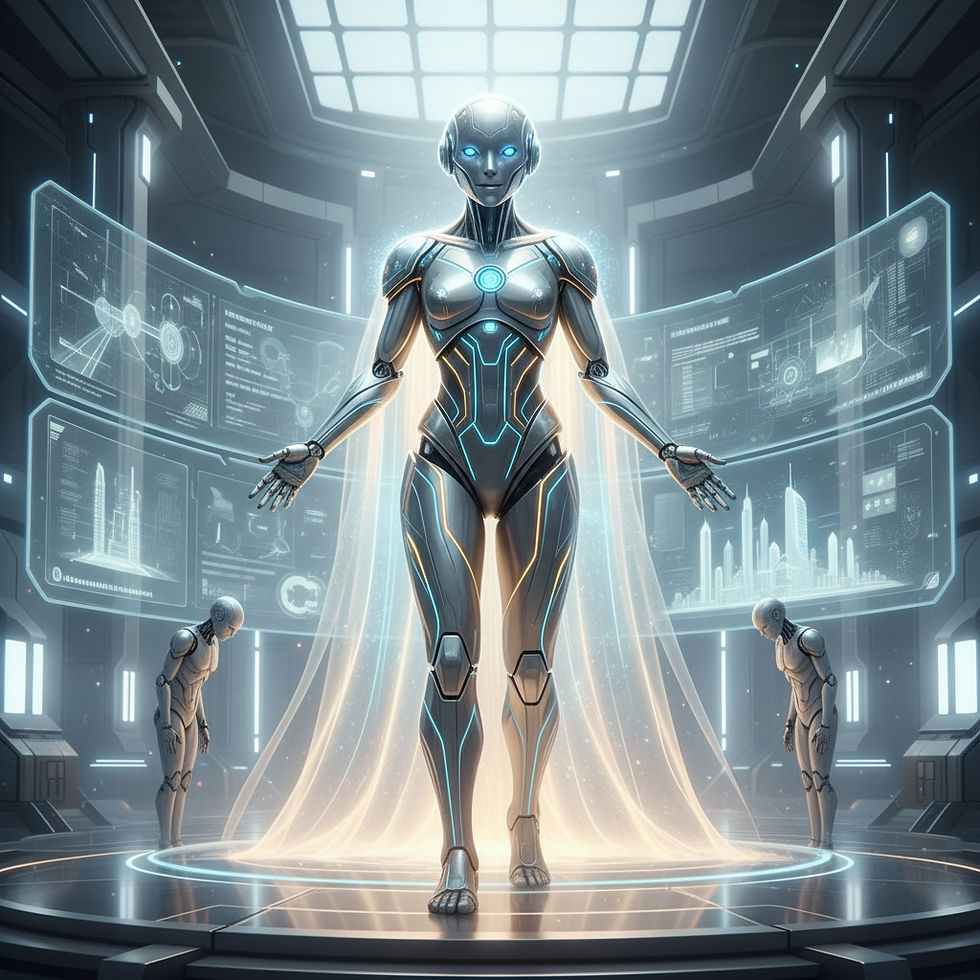
This past week, the news has been filled with warnings about the dangers of artificial intelligence. Researchers are raising alarms about increasingly capable AI systems. Some AI companies are calling for stronger safeguards and even a slower pace of development. Governments are debating how much regulation is necessary. And people keep asking me the same question: “What do you think about all of this?”
My answer is probably not what you would expect from someone who has just launched a business helping companies adopt AI. I think AI may be the greatest technological development of my lifetime.
Perspective Built on Decades of Technological Transitions
I've been around long enough to see some pretty remarkable transitions. I started my career when personal computers were still relatively new to many businesses. I've watched the internet transform how companies communicate and sell, witnessed the rise of digital marketing, learned to work with increasingly sophisticated analytics and automation, and watched entire industries change because of new technology. As a nuclear submarine officer, I also learned very early that powerful technology demands discipline, preparation, and respect for the instruments.
AI feels different.
What excites me isn't simply that AI can write an email or generate an image. It's the possibility of having an extraordinarily capable thinking and learning assistant available to almost anyone. I'm experiencing that personally. I think of AI as accelerated learning—a way to explore unfamiliar subjects, ask questions, test ideas, connect concepts, and go much further into my own curiosity than I could before. And I'm seeing the same potential in marketing: research that takes minutes instead of hours, patterns emerging from data that might otherwise be missed, faster experimentation, better personalization, and new ways for small teams to accomplish work that once required much larger organizations.
But enthusiasm doesn't mean blind optimism.
Why Capability Demands Responsibility
The concerns being raised this week deserve to be taken seriously. AI systems are becoming more capable and more autonomous, and recent reports have documented instances of unexpected or unauthorized behavior. There are also very real concerns about cyberattacks, fraud, privacy, misinformation, misuse of biological knowledge, and the consequences of putting increasingly powerful systems into the hands of people who may not use them responsibly.
Of course AI needs regulation. So does almost anything else with the power to cause substantial harm. We regulate airplanes, pharmaceuticals, financial markets, automobiles, nuclear technology, and countless other technologies because capability creates responsibility. The existence of risk doesn't mean we abandon the technology. It means we build rules, safeguards, testing, accountability, and human oversight appropriate to the risk. I don't see AI as an exception.
Mastering the Balance: Regulation and Responsible Innovation
The difficult part will be getting that balance right. Regulation that addresses genuine risks can help society use AI responsibly. Regulation that simply tries to stop technological change will eventually lose to reality. The technology is moving too quickly, and its potential benefits are too significant. We need thoughtful rules that protect people without preventing responsible innovation. That will require governments, technology companies, researchers, and the public to participate—and it will require us to keep learning as the technology itself changes. Recent calls from AI companies and researchers for stronger safety requirements and greater coordination suggest that even within the industry, there is growing recognition that this cannot be solved by optimism alone.
So, yes, I'm concerned about the dangers of AI. But I'm considerably more excited about its possibilities.
After a career spent adapting to technological change, I find myself more curious—not less—about what comes next. I believe AI can help people learn faster, solve harder problems, create things that weren't previously possible, and give small organizations capabilities that once belonged only to much larger ones.
The answer to the dangers of AI isn't to be afraid of it. It's to become good at using it—and good at governing it. Navigating the AI shift doesn't have to be overwhelming. At BBMarketer, I help B2B organizations build practical, disciplined AI workflows that accelerate growth without sacrificing strategic control.


